
Pedestrian detection for safety
Detect pedestrians near vehicles and machinery in real time using existing CCTV cameras.
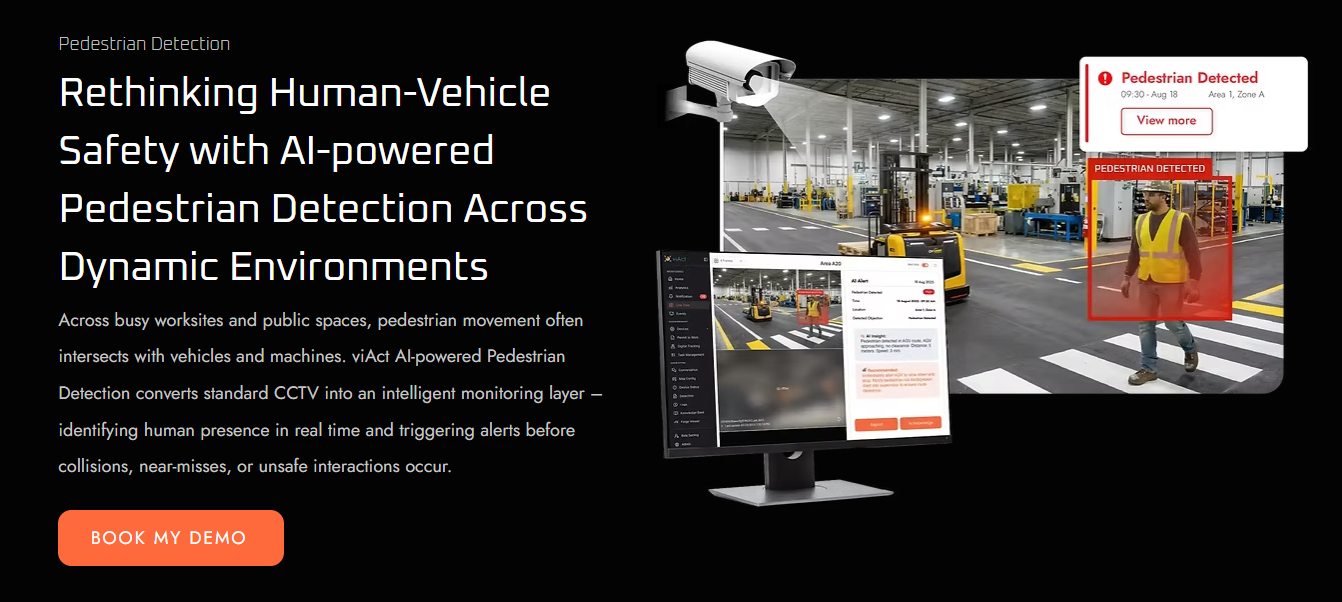
Description
viAct Pedestrian Detection is a computer vision safety solution that turns existing CCTV or IP cameras into an intelligent monitoring layer. It identifies human presence in real time within predefined risk zones, triggering alerts before collisions or unsafe interactions occur. It is built for safety teams in manufacturing, logistics, construction, public spaces, transport hubs, and maritime ports.
How it works
The module is selected from viHUB, a centralized library of over 200 AI video analytics modules. It connects to existing IP or CCTV cameras via RTSP without additional hardware, and can be monitored on-site or from centralized control rooms. Once active, it continuously processes live video feeds to evaluate pedestrian presence, movement behavior, and spatial context, identifying pedestrians in restricted areas, movement patterns, dwell time, and unsafe proximity to vehicles or equipment.
Alerting and event records
Alerts are issued immediately through on-site alarms and remote channels such as dashboards, mobile notifications, or SMS. Each event is recorded with time-based visual context, enabling teams to review histories and uncover recurring exposure patterns. The solution supports monitoring across multiple sites and integrates with enterprise safety systems for data-driven safety governance.
Where it is used
The solution is critical in manufacturing plants, warehouses, logistics yards, public plazas, retail corridors, construction zones, airports, metro stations, and maritime ports. It monitors pathway deviations, blind-spot entry, and unexpected human presence near forklifts, automated equipment, delivery vehicles, cranes, and trucks. It also addresses challenges like poor visibility, overcrowding during shift changes, and pedestrians moving outside approved walkways.
Measured impact
A case study from a Dublin manufacturing facility reported a 58% reduction in pedestrian-vehicle near misses within weeks of deployment. The solution also reduced manual monitoring and post-incident reviews, improving audit readiness and compliance oversight. Additional benefits include a reduction in pedestrian exposure incidents by around 60%, reduced claims frequency and regulatory penalties by 80%, and improved understanding of pedestrian movement patterns for smarter layout decisions.
Key Features
Real-time pedestrian detection
Real-time identification of pedestrians in predefined risk zones using computer vision.
Integrates with existing cameras
Works with existing IP or CCTV cameras via RTSP, no extra hardware needed.
Immediate alerting
Alerts via on-site alarms, dashboards, mobile notifications, or SMS.
Event recording and review
Records events with time-based visual context for review and pattern analysis.
Part of viHUB module library
Part of viHUB, a library of over 200 AI video analytics modules.
Use Cases
Manufacturing and warehouse safety
Monitor workers crossing vehicle routes and forklift zones in manufacturing plants and warehouses.
Construction site monitoring
Track pedestrian movement near active work fronts, lifting zones, and vehicle routes on construction sites.
Transport hub safety
Ensure visibility across platforms, service corridors, and vehicle interfaces in airports, metro stations, and transit terminals.
Maritime port monitoring
Identify human presence near loading zones, equipment interfaces, and vehicle routes in maritime ports.
Frequently asked questions about Pedestrian Detection
- What is viAct Pedestrian Detection?
- viAct Pedestrian Detection is a computer vision solution that uses AI video analytics on existing CCTV or IP cameras to identify pedestrians near vehicles, machinery, or restricted zones in real time.
- Who is it for?
- It is designed for safety teams in manufacturing, warehouses, logistics, construction, public spaces, transport hubs, and maritime ports.
- What cameras does it support?
- It connects to existing IP or CCTV cameras via RTSP without additional hardware, and can be monitored on-site or from centralized control rooms.
- How are alerts delivered?
- Alerts are issued through on-site alarms, dashboards, mobile notifications, or SMS, and each event is recorded with time-based visual context.
Pedestrian Detection Alternatives

Magic Hour
Create videos, images, and audio with 100+ AI tools in one browser-based studio.

Molyin
Generate cinematic videos, images, and music from text prompts in one studio.

Photo Animate - Photo to Video AI
Turn still portraits into lifelike videos with natural motion and easy controls.

GoCrazyAI
Turn text or photos into videos, images, music, and voice with five AI models.

FlickSpeed
Create production-grade videos with AI agents and pay only for the models you use.

HighReach
Create standout videos, images, and audio with leading AI models in one studio.

seedancetwo2.0
Create cinematic videos from text, images, video, or audio with reference-based control and audio sync.

OmniGemini
Prototype video directions with text, images, clips, and audio, then edit in natural language.